Every year, Bessemer Venture Partners releases a State of the Cloud report. You can access the report here. This year, it’s all about AI, which is why Sameer Dholakia, Partner at Bessemer, calls it the Cloud AI Era. Four portfolio companies join Sameer to talk about three trends of the Cloud AI Era.
- AI foundation models
- Multimodal models
- Change management
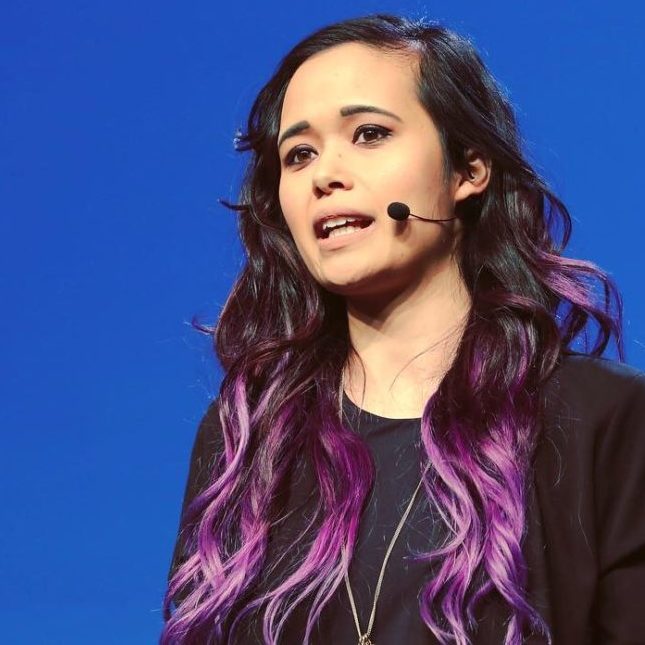
Julia Chapin, COO at Abridge, Kate Jensen, Head of Revenue at Anthropic, Rami Karabibar, CEO and founder at EvenUp, and Timothy Young, CEO at Jasper, share insights into this new wave that is changing everything about how we live, work, and buy.
Trend #1: Foundation Models
Many models exist: open source, closed source, frontier models. At Anthropic, Claude’s model performance gets better and better. People choose this foundation model because it understands nuance and detailed context so well.
For Abridge, the decision of which model to choose was largely a function of what delivers the best quality product for the end user. This wave is different from the Cloud wave because, during that time, everyone picked one cloud. With AI, the landscape is changing so rapidly, and there are so many options, so customers can compare everything available against the latest and greatest LLMS to find what works best for them.

For startups like EvenUp and Abridge, there isn’t a one-size-fits-all model that meets industry needs. Both require precision and accuracy, so 90% of the way there isn’t enough. They use a combination of existing models as well as proprietary models to ensure accuracy in their sensitive fields of healthcare and legal tech.
When Jasper launched in 2019, it started with one model. Today, it runs about 39 models across its entire customer base, making it LLM agnostic. Customers want structured outputs, repeatability, trust, and high confidence, so for now it’s up to you to find the right model for your specific use case.
Sameer summarizes: “As the guy that’s lived through these waves before, I think many in the audience will agree with me that it’s very different than the last revolution that we saw. Like we’re all here at SaaStr in Cloud. But when we got started in Cloud in 2007, most businesses that were starting with cloud picked one cloud.
Multi-cloud really didn’t arrive for many years in a high penetration rate of how enterprises were building their applications. People were just building on one infrastructure, by and large. And I think what we’re seeing in this wave is very different. We’re seeing a lot of folks that are quickly leveraging the capabilities of a number of different models and large language capabilities.”
Building Moats of Defensibility

Language models unleashed wonderful and magical new capabilities for application builders. You can solve long, old problems in novel, exciting ways. The underbelly is that these models are readily available to everyone. So, how should you think about defensibility in this context?
Jasper was one of the first businesses to experience rocketship growth and achieve double-digit ARR by building on top of an LLM. They transformed from an API wrapper to a full application platform. How did they achieve a moat of defensibility?
In 2019, Jasper introduced people to LLMs. GenAI has seen broad adoption and captured everyone’s imagination over the last few years. As an applied AI application company, the way they think about defensibility is:
- Workflows
- Integrations
For example, one of their larger customers is iHeartRadio. Historically, the business model has been to sell radio ads, and the people running the ads are typically local businesses. The problem is that when a BDR called these businesses, the person on the other end didn’t have the budget or know-how to create an effective ad.
Now, Jasper connects to Salesforce and analyzes all the leads, so when a BDR reaches out to the customer, Jasper provides a script for an ad for that particular business in the pitch. All the customer has to say is, “That’s great. Let’s run the ad!”
Trend #2: The Power of Multimodal Models
LLMs are very much text-driven, but we’re seeing other innovations with audio and video, which allow you to change the solutions you can offer customers. Let’s look at how multimodal capabilities are important for businesses.
Multimodal models are core to Abridge. A fundamental artifact is a doctor’s conversation with a patient. Abridge ingests audio, transcribes it in-house with speech recognition models, and runs additional models on top to generate a clinical note.
Jasper has also evolved into a multimodal model because Enterprise companies wanted to provide personalized images. For example, a large shoe manufacturer wanted to bring personalization to the product pages in the product description and the images. If they released a new trail running shoe, they wanted a photo of an athlete running on a trail close to the website visitor’s house. With Jasper’s acquisition of ClipDrop, they can build a catalog of trails across the U.S. and generate a series of models running on those trails in minutes.
Trend #3: Change Management Matters
In the last paradigm shift, the end user experienced little change when moving from on-premise software to SaaS. With AI, everything is different, so change management is an important part of this revolution.
Change management is traditionally difficult in healthcare. With Abridge, they’re speaking to a core pain point: doctors and healthcare workers want more time with their families and less charting after hours. People are desperate for it.
Some places have a system that works, and doctors are busy, so it’s challenging to get them to take the time to learn something new, even if it’s simple. From that perspective, you need to invest in programs that help onboard and train these users to use and trust AI. You also want to seek out early adopters and turn them into champions.
Timothy, CEO of Jasper, suggests building a services strategy in parallel to building an AI application company. Don’t wait. Customers aren’t adopting AI like they’ve been adopting SaaS over the last ten years.
For most SaaS software, the value and outcomes were very deterministic. You fill out a form or do XYZ, and this is the unit of value you’ll get from the software. When working with AI apps and models, the outcomes are more probabilistic.
Timothy explains: “When you go out to large enterprises and you watch them use AI applications, the average employee will look at you and say ‘it’s a blank box. I don’t know what to put in there.’ Or, ‘you know what? I had this great prompt a month ago and I got this great report. My boss asked me to do this report again but I can’t remember what that prompt was.’ And so then you see users managing notepads of prompts and cutting and pasting.
So you really need to go in as a trusted partner. It’s a huge benefit and differentiator for you against the competition to go help the customer understand how to apply it to their business and how to transform their employee experience with this.”
Key Takeaways

- Focus on high-impact, high-ROI solutions where there is a clear “why now.” You want to be a business that can solve problems that couldn’t be solved before.
- Build for defensibility. Otherwise, it will be a race to commoditization.
- Leaky buckets in SaaS are painful. The same is true in AI, so focus on user delight.
- User-centricity is non-negotiable. Help the world learn to adopt this breakthrough technology.