
Dear SaaStr: What Percent of My Revenue Should Come from Referrals and Word of Mouth?
Ultimately, most top software companies end up getting 20-50% or so of their new customers from their existing customers once they hit scale.
Sometimes even more. From referrals. From brand. From word-of-mouth:
- Bill.com at IPO saw 50% of its new customers coming from word-of-mouth and second-time buyers. More here.
- Even at $1B+ in ARR, 33% of HubSpot’s customers still came from word-of-mouth. More here. In fact, it’s still their #1 source of new customers.
- Referrals are Chime’s largest acquisition driver since 2022, helping bring sales & marketing spend down to 26% of revenue in Q1 2025
- At $1B+ ARR, 20% of Toast’s customers came from word-of-mouth

- Klaviyo powered to almost $1B ARR, growing a stunning 35% — on the backs of its raving Super Fans:
A few related thoughts:
- First, track it. Too many SaaS companies don’t really track what % of their customers come from word-of-mouth.
- Make the sales team ask. If you don’t ask, you often don’t get the true story on “how did you hear about us”?
- Then, set a goal. Say 20% to start, going up over time. Even by say $3m in ARR, this engine should be running. You’ll have been around long enough by then for second-order revenue to kick in.
- And make it a top metric for the company and your head of marketing. So everyone knows. And so it goes up.
And critically: if your percent of customers from word-of-mouth is going up over time — you know you have something good. Folks really love you, in the way that matters. They are telling more and more of their business friends.
Then as CEO, your job, as best you can, is to accelerate that process. To get that word-of-mouth/viral/referral engine going faster. Because not only will that turbocharge your growth, it adds certainty to your lead generation, and also most of these new customers will “free”.
How to accelerate things:
- Over-hire in Customer Success if you can afford to. Have more hands helping your early customers be happy. More here: SaaStr | Customer Success Is A Single Digit Hire
- Double-down on your “mini-brand” as soon as it emerges. As soon as you start to get any referrals, double down here. Have your first user conference. Do more niche events and PR. Get on a plane and spend time with your super-seeders. Make yourself appear to break-out within your narrow niche before anyone in the Rest of the World has ever heard of you. More on this here: SaaStr | In The Early Days, You Won’t Have Enough Customers. But Your Mini-Brand Will Come to Your Rescue.
- Ask. Ask your happy customers for more referrals, both directly, and through tools that can automate this.
- Don’t get distracted. Once you have a niche that works, focus on that niche, at least until you are big enough to be able to afford to have a separate team work on new things. If most of your customers are SMBs, stay focused there until $10m ARR. Same if they are mid-market. The more you concentrate on what’s working, and not searching for that shiny penny, the faster referrals and your mini-brand will work. Avoid a “peanut butter” strategy if for no other reason than that it won’t create enough second order revenue.
- Hire someone to own customer marketing. Do it for real. The more you share success with your existing customers — the more they will refer more of their friends to you. More on that here.
- Do customer events and visit customers in person. This always helps, done right. And bringing prospects and existing customers together at your own events can be magical. Your customers, if happy, will tell the prospects to buy.
- Get out there — and be a hero. Press, PR, speaking at events etc. aren’t magical on their own in B2B. But they do remind your stakeholders — prospects, customers and employees — who you are and that you are present and matter. It helps. Be a hero. Not a Twitter grouch.
More on Second Order Revenue in SaaS here: SaaStr | CLTV Isn’t The Whole Story. Don’t Shortchange Second-Order Revenue.

And a few things to be careful of:
- Make sure your NPS and CSAT stay up if you have Customer Success Report to Sales. I often see customer happiness fall when CS becomes part of sales. Because then it all becomes about the upsell, not the happinesss.
- Be careful about aggressive price increases on the base. Raising prices on new customers, they’ll never know. But raising prices on existing customers? They’re always sensitive. At a minimum, make sure you have earned it. Have you — really? Way too many vendors are raising prices aggressively as a response to slowing sales. Maybe you have to. But this doesn’t incent word-of-mouth and customer happiness.
- Be careful about aggressive tactics at renewal time and when customers cancel. That again can be tempted in tougher times. But make it easy to leave. In fact, go further and thank them when they leave. Not only does this increase the odds they come. back, but it increases the odds they refer their friends. Customers can leave and still be happy. It can be for other reasons. So don’t burn them on the way out in the hopes of retaining a few extra nickels. We’ve all seen this way too often lately.
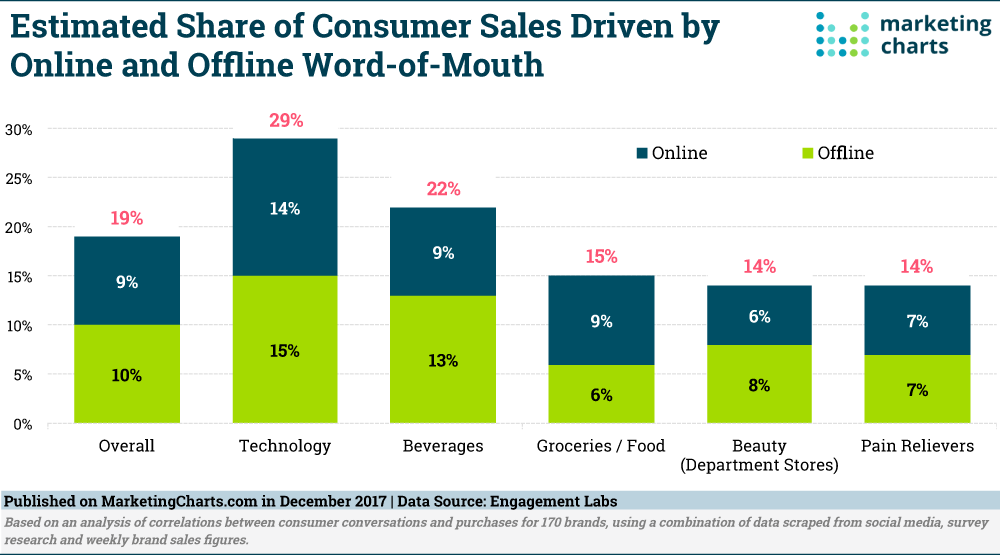
Here’s another survey on data from a little while back, showing tech companies get 29% of their new customers from word-of-mouth.
Get there yourself:
And a recent deep dive with Klaviyo’s CEO, talking in part about how they incented and nurtured their Super Fans:


