So who’s doing well in SaaS today? Well, one of those hero companies is Samsara. Few companies have achieved the level of impact and growth as Samsara. Powered by the overall strength of the U.S. economy, by shipping, by trucking, by industrial applications, and more … there’s no downturn at Samsara. It’s currently at $1.26B in ARR and growing 36%! It hasn’t missed a beat.
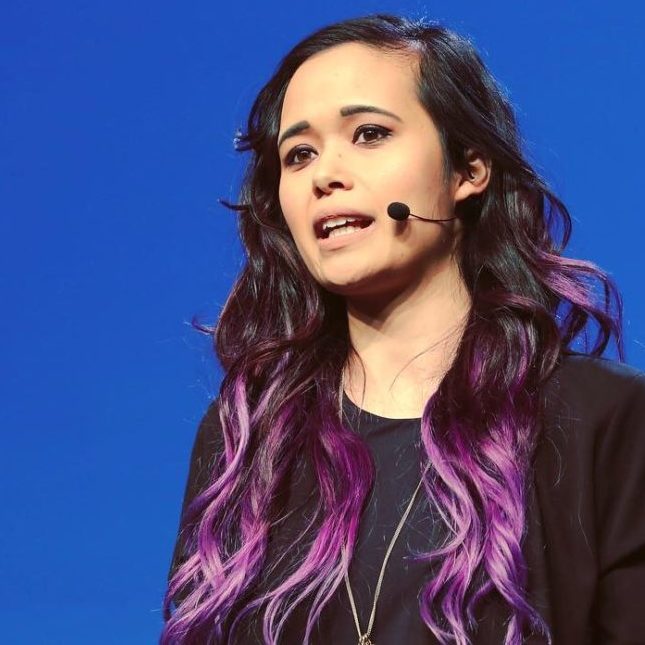
SaaStr CEO and Founder Jason Lemkin sat down with Samsara CEO and Co-Founder, Sanjit Biswas to delve into the inner workings of a company that’s not only transforming its industry but is also a case study in brilliant strategy and execution.
Is there a downturn?
We start out with Jason asking the sane meta-question we asked of Andrew Bialecki, co-founder and CEO of Klaviyo: “Is there a downturn?”
“No,” Sanjit answers. “It’s very consistent because if you think about who these folks (their customers) are, it’s the folks picking up your trash, delivering food to the grocery store, running the electric utility. These are essential services. So they’re just constant, right? They’re just running nonstop. You also just have this, world of infrastructure, which is utilities, the roads, and all of this other stuff that’s behind the scenes, that is going through this digitization process that IT went through 10, 20, 30 years ago.”
Samsara’s Rise to Vertical SaaS Leader

Samsara is now hailed as a vertical SaaS leader, growing at a remarkable pace—36% at an astounding $1.26 billion in annual recurring revenue. So how did it garner success so quickly?
Prior to Samsara Sanjit and his co-founder John Bicket, previously co-founded Meraki, which was acquired by Cisco Systems for more than $1B. They stayed on at Cisco for some time to scale Meraki within Cisco, but at some point, Cisco wasn’t for them. It was a very big company and they were being asked to work on other parts of the business that weren’t related to Meraki. So they stepped away and decided to start tinkering again.
“And as engineers,” Sanjit explains, “we just like building things. We like being useful and became fascinated by the world of operations and infrastructure. It’s the world behind the curtain. We’d never thought about how food gets delivered. So we became fascinated by the market and the customer. And while we were tinkering, we were building little sensor systems, cause we knew how to make hardware and we knew how to cloud connect it.”
Sanjit attributes the early and continued success of the company to their ability to disrupt and scale within an evolving market space once considered largely overlooked.
They began in the early days in food and beverage infrastructure, knowing that f&b has temperature-sensitive assets that might spoil if something happens. They set out to create something useful and their initial food & bev beta testers were actually the ones who brought them into their ultimate breakout product — fleet. There was a real initial problem Samsara identified early on a ton of food (and money) being wasted due to old infrastructure and lack of data among the delivery fleets.
Sanjit explains: “Immediately we just saw, okay, they’re doing everything on pen and paper. They’re making phone calls to figure out where people (and trucks) are. If they had GPS tracking, it was like a breadcrumb that dropped every 15 minutes or 30 minutes. It was super antiquated. And immediately we saw, okay, that’s where we can go be useful. That’s how we have impact.”
Getting the Band Back Together
The name Samsara actually means the cycle of death and rebirth. Sanjit and John picked the name as there are actually several execs and employees working together at Samsara who knew each other previously or worked together at Meraki.
Kiren Sekar, who’s spoken previously at SaaStr Annual, was Meraki’s CMO before becoming Samsara’s Chief Strategy Officer and founding chief Product Officer. Ben Calderon, Samsara’s CTO who runs the hardware team did the hardware at Meraki.
A lot of Samsara’s early sales leaders, sales reps, and a lot of engineers all liked working together. So that’s what got folks interested and the name stuck.
Unlocking a Larger TAM

Samsara has taken its initial total addressable market and actually, 50x’d it. So how did they take an initially undervalued market segment and grow the company to the billions?
“We can talk about being multi-product,” Sanjit explains, “But it’s really just solving multiple problems for the customer. Everything we offer on the platform, we came up with organically through customer conversations.”
Pre-Samsara there was only about a 500 million dollar market cap for all of the vendors combined.
Between Samsara’s innovation and market changes, they effectively unlocked a larger TAM. Founders need both to be right for a company like Samsara to accelerate at the rate and growth it has been. Samsara has benefited from having a market tailwind behind them, growing for them at a fairly steep rate.
There was also little to no technology at the its time of inception in the fleet trucks being used daily across the United States. Originally entering the market with a telematics product, their expanding suite now includes AI-driven safety and driver coaching tools. This evolution is driven not by diversification for its own sake but by customer demand, with a sharp focus on expanding within and across verticals. This rapid deployment and adoption has benefited them greatly.
Sanjit and Samsara hold themselves to an 80/ 20 filter. Once you start hearing 80 percent of customers are interested in something, a new product expansion, feature, or hardware, you should probably do it.
Sanjit explains, “Customers were asking us about safety. They were saying, ‘yeah, this is an amazing telematics product. Is there a camera that you recommend that you integrate with really well?’ That didn’t exist in the market. People were using it but it wasn’t a good camera. So we built them one. And that’s how the second product came about.”
The Intersection of AI and Fleet Infrastructure

“Our customers do not go shopping for AI and GPT for enabled bots. That’s just not their world or their language, ” Sanjit says. “What they are trying to figure out is ‘how do I reduce risk on the road?’ And AI is super useful for that because you have all this data and you actually know where people are driving, how long they’ve been on shift, if they run stop signs or do they speed a lot? There are all these like leading indicators of risks and if you have all that data, you can actually get out in front of the risk and coach the driver.”
The only way for Samsara to help its customers sift nearly endless hours of GPS traces is to have AI. The AI can surface the right insight in the data, and make recommendations to take action. By closing the loop for its customers, Samsara helps eliminate or cut down risk.
By utilizing AI in this way, Samsara is creating a lot of value for its customers, even though they’re not specifically asking for AI in name.
Key Takeaways
Samsara stands as a testament to the potential of SaaS to transform and modernize traditional industries. Through strategic momentum, customer-driven innovation, and an adaptable yet focused approach to scaling, they are setting benchmarks not only for growth but for tangible impact. As we look to the horizon, Samsara is not just growing; it is reshaping the future of operations.
By capturing the essence of modern industry needs and marrying it with cutting-edge technology, Samsara illustrates the power of adaptation and the continuous pursuit of excellence in the global SaaS landscape.